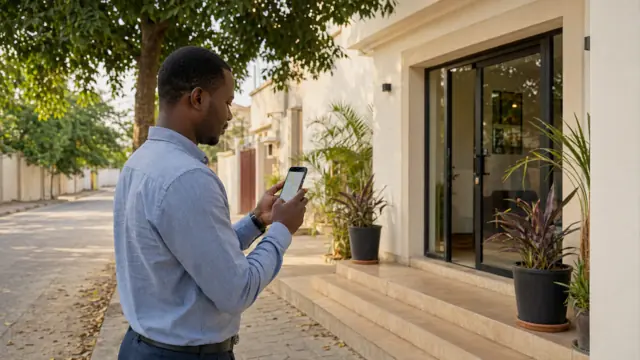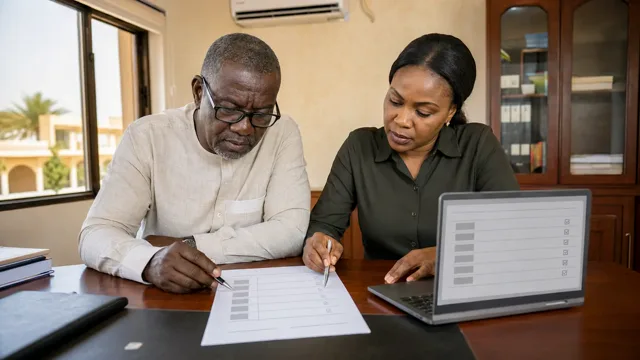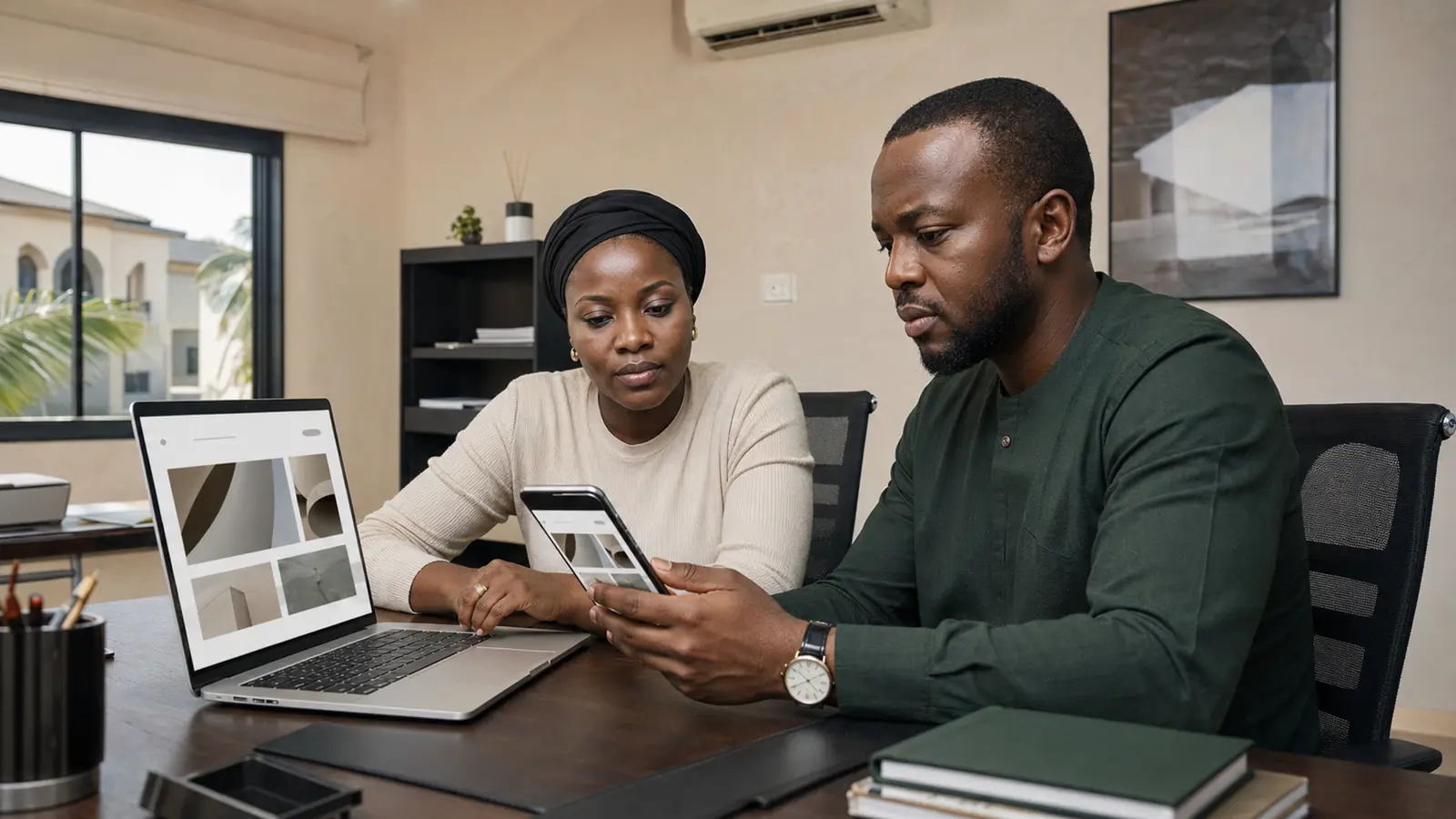
Someone hears about your company through a friend, sees it on TikTok or notices the sign while driving past. Before calling, they search the name.
What they find either confirms the recommendation or weakens it.
A professional website gives that interest somewhere useful to go. It explains what the business does, proves that it is active, answers the first questions and makes the next step obvious. In The Gambia, that next step is often a call, a WhatsApp conversation, a visit, an enquiry or a booking.
The website does not need to be large. It needs to be convincing on a phone and connected to the way the business actually sells.
What does website design cost in The Gambia?
There is no single honest price for a website because the word “website” can describe very different work.
A one-page presence for a new service business is not the same project as a hotel website with room types and booking integration. A restaurant menu site is not the same as a product catalogue with changing stock. A corporate website that must satisfy international partners needs a different level of content, review and governance from a quick promotional page.
When comparing quotations, first identify which of these you are buying:
- Basic presence: a small site that explains the company and makes contact easy.
- Professional business website: stronger brand presentation, service pages, local search foundations, analytics and a managed enquiry journey.
- Catalogue or booking website: structured products, rooms, vehicles, properties, appointments or availability.
- Commerce website: orders, customer records, payment or mobile-money workflow, delivery and after-sales.
- Operational platform: a website connected to stock, CRM, booking, reporting, staff processes or custom administration.
The cheapest quotation may be appropriate for the first category and completely unsuitable for the fifth. Compare scope, responsibility and ongoing cost, not only the number at the bottom.
What a professional quotation should explain
A clear proposal tells you what will exist when the project is finished.
It should cover:
- the pages or customer journeys included
- who writes and approves the copy
- who supplies and prepares photographs or video
- mobile design and testing
- contact forms, calls, maps and WhatsApp behaviour
- search foundations and analytics
- hosting, domain, email and recurring charges
- who owns each account
- what the business can update
- security, backups and recovery
- post-launch support
- what is specifically outside the price
“SEO included” is too vague. “Hosting included” is also incomplete if the quotation does not say for how long, in whose account and what happens when the supplier relationship ends.
Mobile is the first design, not the smaller design
Many customers will meet the company on a phone. They may be using mobile data, moving between applications or searching while already on the road.
The mobile experience has to answer the important questions quickly:
- What does this company do?
- Is it right for me?
- Where is it?
- Can I trust it?
- Is the information current?
- How do I call, message, book or visit?
A website can look impressive on a large monitor and still fail this test. Heavy video, oversized images, tiny buttons, long introductions and hidden contact details create friction.
A mobile-first site gives priority to clear language, strong images, fast loading and an obvious action. Desktop still matters, especially for corporate buyers, institutions and international customers. It simply should not be the only version that received serious thought.
A website and social media have different jobs
Facebook, Instagram and TikTok can create attention quickly. They are good places to show activity, personality, products, people and proof.
They are not a complete substitute for an owned website.
Posts move down the feed. Important information becomes difficult to find. A platform can change its rules or restrict an account. Customers may not know which profile is official. A serious buyer may want a company email, service detail, policy, location or portfolio that is not organised on social media.
The strongest setup connects the channels:
Social attention → Google verification → website understanding → call or WhatsApp → follow-up
The website provides structure and ownership. Social media supplies movement and repeated visibility. Google helps people verify what they have heard.
If local discovery is the immediate problem, read How to Put Your Business on Google Maps in The Gambia.
Good design in Gambia has to create trust
Trust is not created by adding the words “professional”, “leading” and “best” to every page.
It comes from evidence:
- a real address or clearly defined service area
- working telephone and WhatsApp details
- recent photographs of the place, people or work
- specific descriptions of what the company provides
- correct opening hours
- recognisable clients or projects only where permission exists
- named leadership where appropriate
- clear ownership, privacy and contact information
- consistent details across the website, Maps and social profiles
Local credibility and international presentation are not opposites. A site can feel unmistakably built for The Gambia without relying on flags, clichés or generic “African business” imagery.
Use the real environment. Show the actual quality. Make the company easy to verify.
Search visibility starts with the page structure
Google cannot rank a promise that only exists inside an image, animation or Instagram caption.
The site needs crawlable pages with clear titles, one main heading, useful text and internal links. A business that offers several distinct services may need one strong page for each service rather than a home page that mentions everything once.
For local search, the basics include:
- the same business name, phone and location across important profiles
- a correctly managed Google Business Profile
- service pages written around what customers actually need
- useful page titles and descriptions
- descriptive image filenames and alt text
- fast, secure pages that work without layout errors
- a sitemap and clean canonical URLs
- Search Console and analytics configured in company-controlled accounts
Publishing dozens of thin articles does not create authority. A smaller number of genuinely useful pages, connected around the services the company performs, is a stronger starting point.
WhatsApp must open with context
A floating WhatsApp icon is useful only if the next conversation is clear.
The message should tell the team where the enquiry came from. A hotel can include the room or offer. A retailer can include the product. A professional firm can include the service. A property company can include the listing.
Behind WhatsApp, somebody still needs to own the response and the next action. If several people handle enquiries, a simple shared process or CRM prevents good leads from disappearing.
See WhatsApp and CRM for Small Business for the operating model behind the message.
Make sure the business owns what it pays for
Before launch, confirm who controls:
- the domain name
- hosting
- company email
- source files or repository where relevant
- the content-management account
- analytics and Search Console
- Google Business Profile
- advertising accounts
- image and video originals
- backups and recovery methods
A developer or agency can administer these systems. The business should still have an appropriate owner account and a documented route to recover them.
This protects both sides. The supplier receives clear access for the work. The client can change provider later without losing the company’s digital identity.
Use the business account ownership checklist before signing off a new website.
Questions to ask a web designer
Take these questions into the first meeting:
- What business outcome is this site designed to improve?
- What will a customer be able to do from a phone?
- Which pages target our important services and searches?
- Who creates the copy, images and translations?
- How will WhatsApp, calls, forms, booking or stock connect?
- What can our team update without a developer?
- Which accounts will be registered to the company?
- What recurring costs begin after launch?
- What support and response time are included?
- How will we measure enquiries and improve the site?
The answers reveal more than a gallery of attractive home pages.
The website has one job after launch
It has to work in the real business.
Information changes. Staff change. Offers end. New products arrive. Search data reveals questions the original site did not answer. A website that cannot be updated, measured or supported becomes an old brochure very quickly.
Palmward builds business websites around the complete customer path: discovery, trust, action, follow-up and ownership. That may be a focused site, a catalogue, a booking journey or a wider operating system.
Start with the customer decision. Build only what helps it move.