When internet access carries bookings, payments, customer messages, cloud files and daily coordination, an outage is an operating event.
The usual response is to buy a second connection. That is a sensible start, but it is not yet a continuity design.
A real backup plan answers a harder question: when the primary path fails, what keeps working, for how long and under whose control?
If the weak point is coverage inside the property rather than the provider connection, start with the business Wi-Fi installation guide.
Two connections can share one weakness
Businesses often assume that two provider names mean two independent paths.
They may still depend on the same physical route, tower, upstream capacity, local power, building entry point or piece of network equipment. A fault in that shared dependency can affect both.
A second provider still adds value, but the business needs to understand the diversity it is buying.
Useful questions include:
- Does the backup use a different access technology?
- Does it enter the property through a different path?
- Does it depend on the same local tower or fibre route?
- Which equipment and power source do both connections share?
- Is the backup sized for the work that must continue?
Perfect independence is not always practical. Clear knowledge is.
Failover should not depend on a crisis decision
If the team must unplug cables and reconfigure devices during every outage, recovery will be slow and inconsistent.
A correctly designed gateway can monitor the primary connection and move approved traffic to a secondary path. When primary service becomes healthy again, it can return traffic in a controlled way.
That behaviour still needs decisions:
- How long should the system wait before declaring failure?
- Should it fail over when the connection is completely down or also when quality becomes unusable?
- Should active calls or sessions be preserved where possible?
- Should the return to primary service happen immediately or after a stable period?
- Who receives an alert?
Management still needs an alert when automatic failover moves the business onto backup.
Backup capacity should protect priorities
The secondary connection may be slower or more expensive than the primary one. Protecting critical work can be enough.
During backup operation, the business may prioritise:
- payment and booking systems;
- customer communication;
- essential cloud applications;
- management access;
- security and monitoring;
- general browsing;
- guest streaming and large updates.
The exact order is different for every operation.
A hotel might preserve reception, bookings and essential guest communication while limiting high-bandwidth entertainment traffic. An office may protect voice, video and core applications. A shop may prioritise payments, stock and messaging.
Continuity is a business decision expressed through network policy.
Power can break both paths
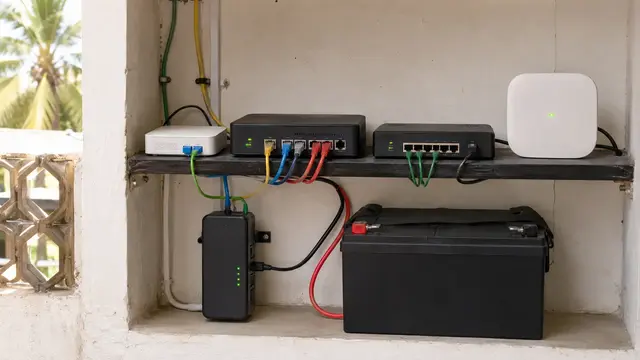
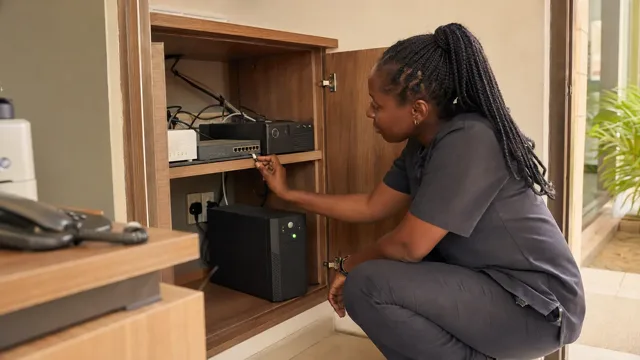
A backup internet service does not help if the router, network switch, access point or provider terminal has no power.
The full critical path should be mapped. That may include:
- provider equipment
- the main gateway
- network switches
- selected access points
- the device running a critical application
- mobile or satellite equipment
- monitoring and communications
Battery backup should be based on measured load and required runtime. If a generator is part of the plan, the battery may only need to bridge the start-up interval. If no generator is available, the design may focus on keeping a smaller essential network alive for longer.
The power continuity checklist helps map the complete service instead of protecting only the router.
Mobile and satellite links need deliberate use
Cellular and satellite connectivity can provide valuable diversity, especially where fixed infrastructure has limitations. They also introduce their own considerations: signal quality, data limits, latency, weather exposure, equipment placement, subscription status and provider policy.
The right option depends on the site and workload.
A portable hotspot used manually may be an emergency tool. A properly installed cellular or satellite path connected to the business gateway can become part of a managed continuity design. Those are different levels of resilience.
Test failure while the business is healthy
The worst time to discover a configuration problem is during a real outage.
A simple test should confirm:
- failure is detected
- critical traffic moves to backup
- staff and customer services behave as expected
- alerts reach the right person
- backup power supports the required chain
- service returns cleanly
- the event is recorded
Testing should be repeated after major network, provider or application changes.
The test may reveal that an application restricts logins from a new address, a payment service behaves differently, a DNS dependency fails, the backup has expired or an access point is not protected by battery power. Those findings are the value of testing.
Document the operating plan
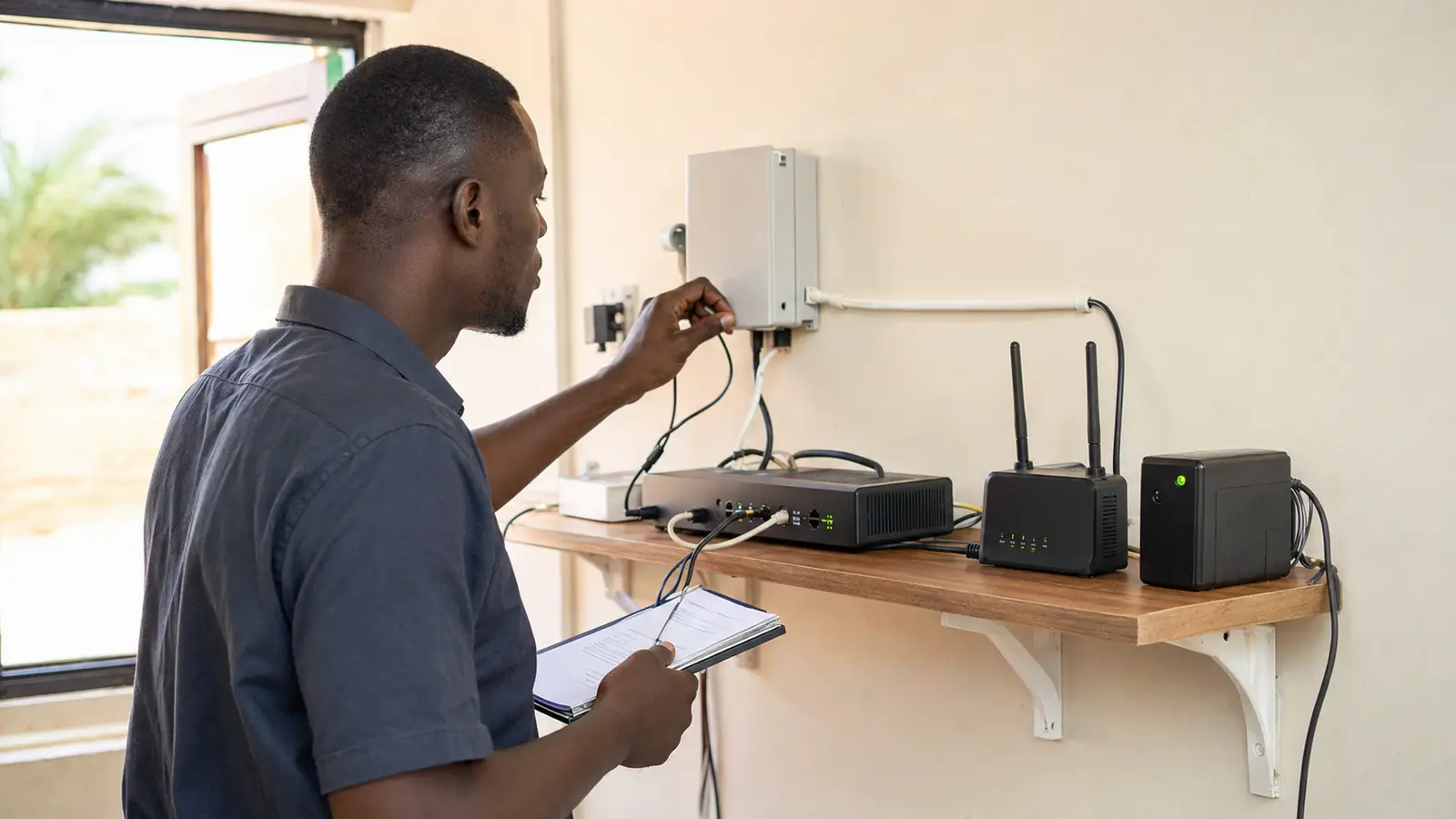
Management needs a plain-language view of continuity, separate from the technical network diagram.
A short operating document can state:
- primary and backup services
- protected systems
- expected backup limitations
- power runtime
- alert recipients
- provider contacts
- manual fallback steps
- test date and result
- technical owner
This turns resilience from an equipment purchase into a controlled capability.
What continuity should buy you
Internet continuity is not about promising that failure will never happen.
It is about preventing one failure from stopping the entire business.
Palmward approaches backup connectivity as a complete operating path: provider diversity, gateway policy, traffic priorities, Wi-Fi, power, monitoring, ownership and testing.
Design for failure while everything is working. When the real event comes, the response should already be clear.
For businesses that want one accountable view of networks, devices, cloud systems and support, read what IT support in The Gambia should cover.