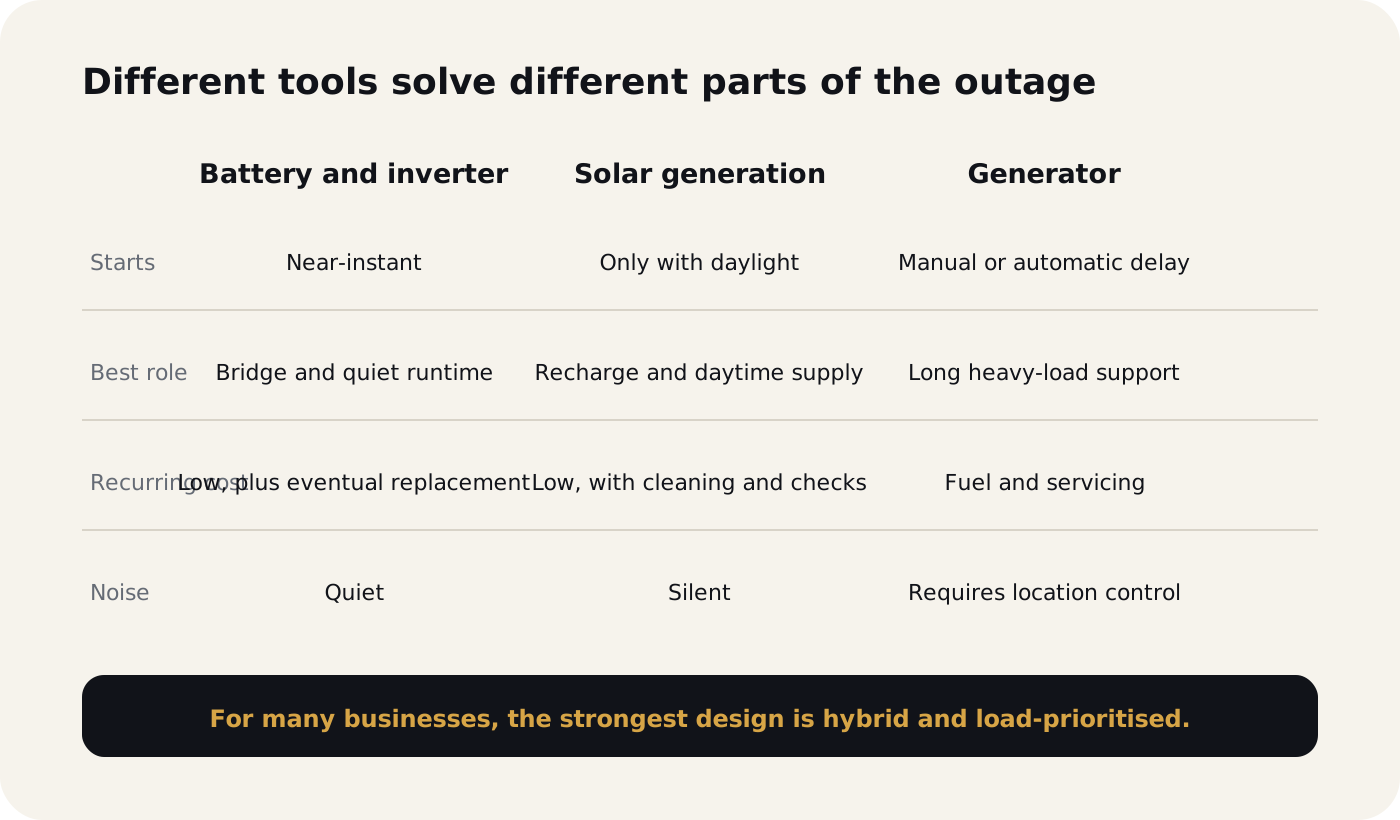
Solar panels do not provide night-time backup by themselves.
A battery cannot produce new energy after it is empty.
A generator does not provide silent, instant power without fuel and maintenance.
The right question is not which product is best. It is which combination keeps the required service operating at the lowest practical cost and complexity.
The Gambia has a strong solar resource
The World Bank estimated average annual global horizontal solar irradiation at approximately 2,100 kWh per square metre. A separate project assessment cited an average of about 5.97 kWh per square metre per day.
That resource is already being used at national scale. A 23 MWp solar plant with 8 MWh of battery storage increased domestic generation capacity.
For a private property, good sunlight supports solar generation. It does not decide battery size, roof suitability, inverter power or how long a business can operate during cloudy weather and at night.
What the battery does
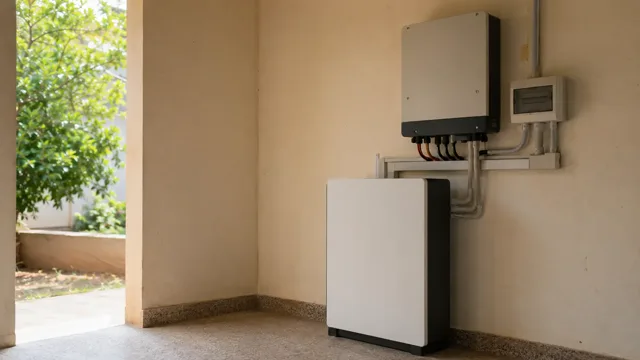
A battery stores energy and supplies it when the grid or generator is unavailable.
Its strongest roles include:
- near-instant continuity
- quiet operation
- short and medium interruptions
- overnight essential loads
- reducing generator runtime
- using daytime solar energy later
- stabilising a defined critical-load circuit
The battery should be sized from the load and required runtime. A 10 kWh label does not mean 10 kWh will reach the equipment after usable range, conversion losses and reserve are considered.
What solar does
Solar produces energy when sufficient light is available.
It can:
- recharge the battery
- support daytime loads
- reduce grid consumption
- reduce fuel consumption
- extend quiet battery runtime
- improve the economics of a frequently cycled system
Solar output changes with weather, shade, dust, orientation, equipment temperature and system design. Panels should be inspected and cleaned using a safe maintenance plan.
What the generator does
A generator converts fuel into electricity and can support long interruptions or heavier loads.
Its strengths include:
- extended runtime when fuel is available
- support for larger motors or air conditioning when correctly sized
- recharge of a battery system
- familiar local servicing
- independence from sunshine
Its costs include fuel, oil, filters, servicing, noise, exhaust management, starting reliability and the need for a safe location.
Generators should never operate in an enclosed or occupied space. Exhaust and carbon monoxide risks require proper siting and professional installation.
Match the design to the outage
Short, frequent interruptions
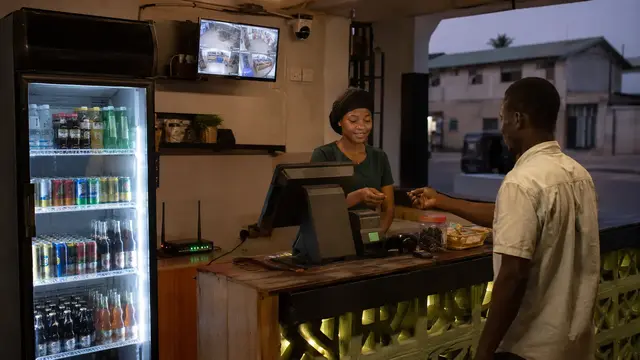
A battery and inverter can be ideal for selected loads. It avoids repeated generator starts and protects internet, payments and security.
Long cuts with modest essential loads
Battery plus solar can extend quiet operation. A generator may remain as emergency support during poor solar conditions or unusually long outages.
Heavy commercial loads
A generator may remain necessary, but a battery can bridge the start delay, protect sensitive systems and let the generator run in more efficient blocks.
Home essentials
An LFP battery can protect lights, Wi-Fi, cameras, fans, a refrigerator and charging. Solar can replenish it. Large air-conditioning loads require a separate decision.
Compare total cost, not only purchase price
Build a five-year worksheet with:
- equipment purchase;
- installation and protection;
- fuel;
- generator servicing;
- battery replacement assumptions;
- panel cleaning and inspection;
- finance cost;
- freight and import handling;
- downtime from failure;
- noise or space constraints;
- monitoring and support.
Do not copy a fuel price or equipment price from an old post. Use current written quotations and an outage profile measured at the property.
The lowest purchase price can become the highest operating cost.
Three designs that often make sense
Essential battery
Protect only internet, lights, cameras, payments and a small number of devices. Use the grid to charge.
This is the simplest starting point.
Solar battery
Protect essentials and use solar to support daytime loads and recharge the battery.
This suits homes and operations with regular daytime demand.
Battery, solar and generator
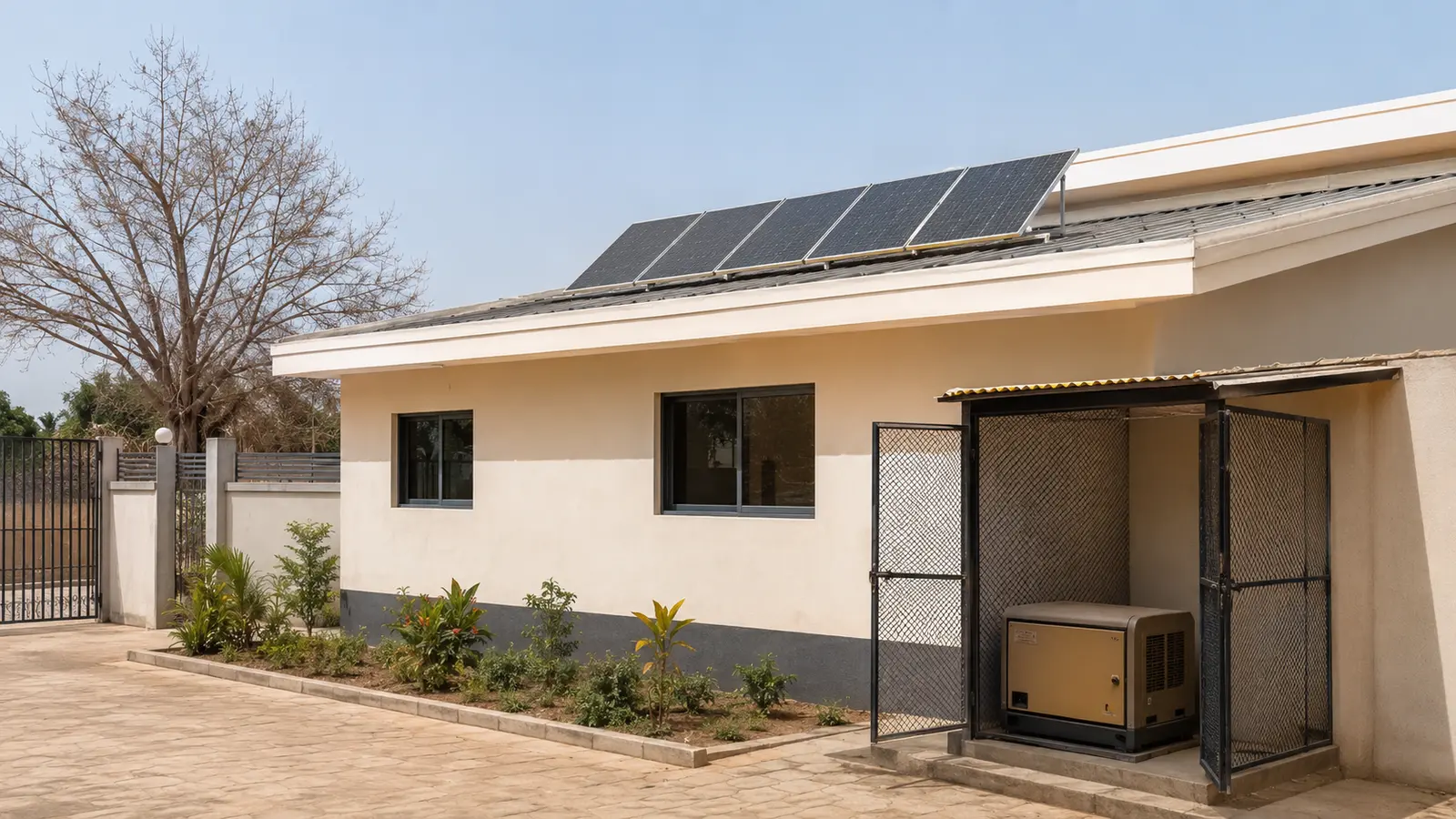
Use the battery for instant quiet continuity, solar for daily energy and the generator for extended or heavy-load operation.
This can be the most robust approach for hotels, restaurants and larger properties when properly controlled.
Demand a tested operating sequence
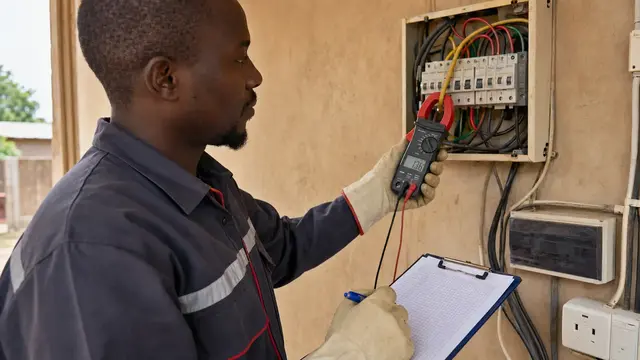
The proposal should state:
- what happens when the grid fails;
- which loads transfer immediately;
- when the generator starts;
- how the battery is charged;
- what happens if solar is low;
- when non-critical loads are disconnected;
- how the system returns to grid power;
- who receives a fault alert.
The battery sizing guide gives the energy calculation. The business continuity guide defines the service around it.
Palmward begins with the operating requirement, then helps coordinate power, connectivity and monitoring into one tested continuity system.