A home battery should make a power cut boring.
The lights on selected circuits stay on. The router and Wi-Fi continue. Cameras keep recording. Phones charge. A fan or television may remain available. Nobody starts a noisy generator for a short interruption.
That experience is possible, but it does not come from buying the battery with the largest number on its label.
LFP is the usual chemistry to ask about
Lithium-ion is a family of battery chemistries. For stationary storage, lithium iron phosphate is commonly shortened to LFP or LiFePO4.
The US Department of Energy notes that LFP has lower energy density than some other lithium-ion chemistries, but its low cost and thermal stability have supported broad adoption in energy storage. The International Energy Agency reported that LFP represented around 90% of battery storage deployments in 2025.
For a home, useful characteristics can include:
- compact size compared with a large lead-acid bank
- high usable capacity when correctly configured
- frequent cycling
- integrated battery management
- low routine maintenance
- modular expansion on compatible systems
These advantages do not remove the need for safe installation and documented equipment.
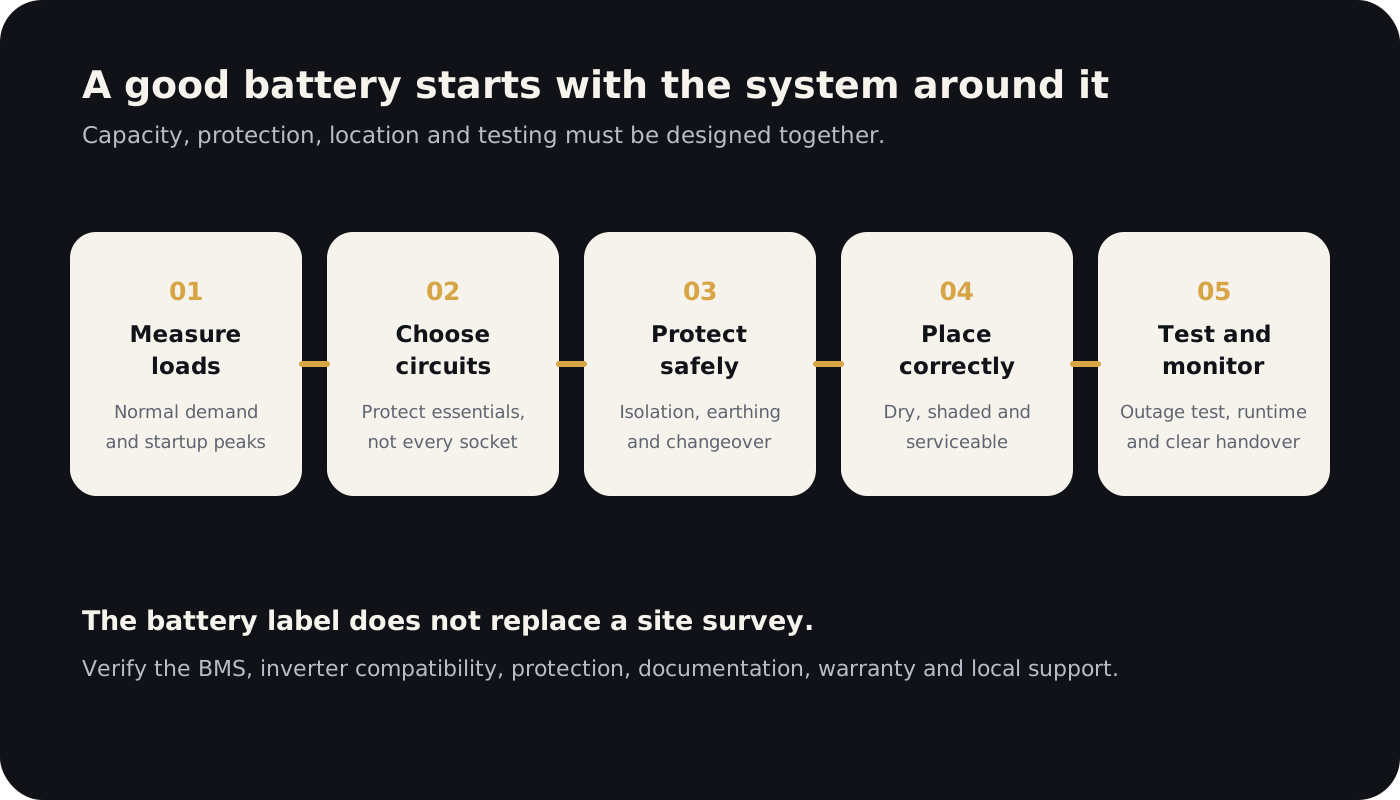
Start with a critical-load list
Write down what should operate during a cut.
A realistic essential list might include:
- router and provider terminal
- two or three Wi-Fi access points
- selected LED lights
- cameras and recorder
- phone charging
- one television
- fans
- a small refrigerator
- a water pump used only at controlled times
Air conditioning, electric water heating, cooking, irons and large pumps can change the system size dramatically.
If the budget is limited, design a smaller system that reliably protects essentials. A battery that tries to power the whole house and empties quickly is not a premium experience.
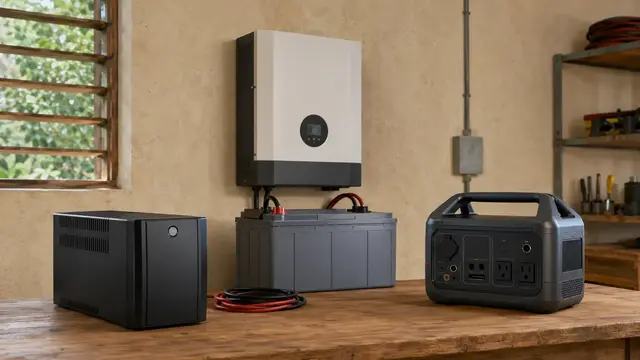
Capacity and inverter power are different
Battery capacity is measured in kilowatt-hours, or kWh. It describes stored energy.
Inverter power is measured in kilowatts, or kW. It describes how much load the inverter can support at one time.
A system can have enough stored energy for the night but an inverter that cannot start a pump. It can also have a powerful inverter connected to a battery too small for the desired runtime.
Both must be selected from measured loads.
Treat heat as a design input
The Gambia's climate matters.
Battery and inverter performance, warranty conditions and service life can be affected by temperature. The installation location should follow the manufacturer's limits and should normally be shaded, dry, secure and naturally or mechanically ventilated as required.
Do not place equipment:
- in direct sun;
- beside a heat source;
- where rain can enter;
- in a bedroom or escape path without a safety assessment;
- where children can reach terminals or controls;
- inside an unventilated metal box;
- on a weak wall or unstable floor.
The exact location and separation requirements depend on the tested system and applicable electrical rules.
Check the complete battery package
A serious quotation should identify:
- exact battery manufacturer and model;
- chemistry;
- nominal and usable energy;
- continuous and peak power;
- compatible inverter models;
- battery management system;
- maximum charging and discharge limits;
- environmental rating;
- temperature limits;
- monitoring method;
- warranty terms and local responsibility;
- UN 38.3 test summary for transport;
- safety data sheet;
- relevant product safety evidence.
IEC 62619:2022 covers safety requirements and tests for secondary lithium batteries used in industrial applications, including stationary applications. It is one useful part of a technical evidence pack, not a substitute for correct system design.
Avoid quotations that say only “10 kWh lithium battery” with no model, test summary, warranty process or compatibility evidence.
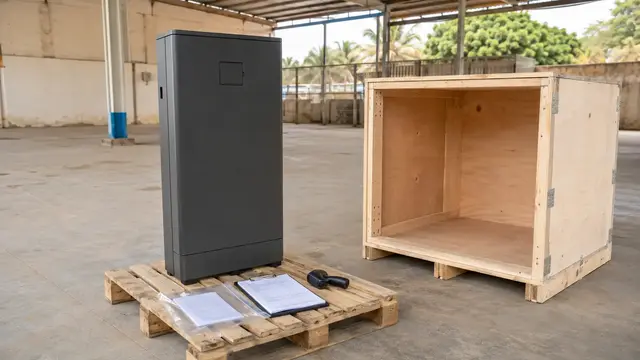
Do not assume lithium is simple to ship
Lithium batteries are compact to install, but transport is regulated.
The IATA 2026 battery guidance states that lithium cell and battery types must pass the applicable UN 38.3 tests to be permitted in transport. Shipping also involves packaging, marking, documentation, training and state-of-charge requirements that vary with configuration and transport mode.
Use a freight route that is qualified for dangerous goods. Do not hide or misdeclare batteries inside normal cargo.
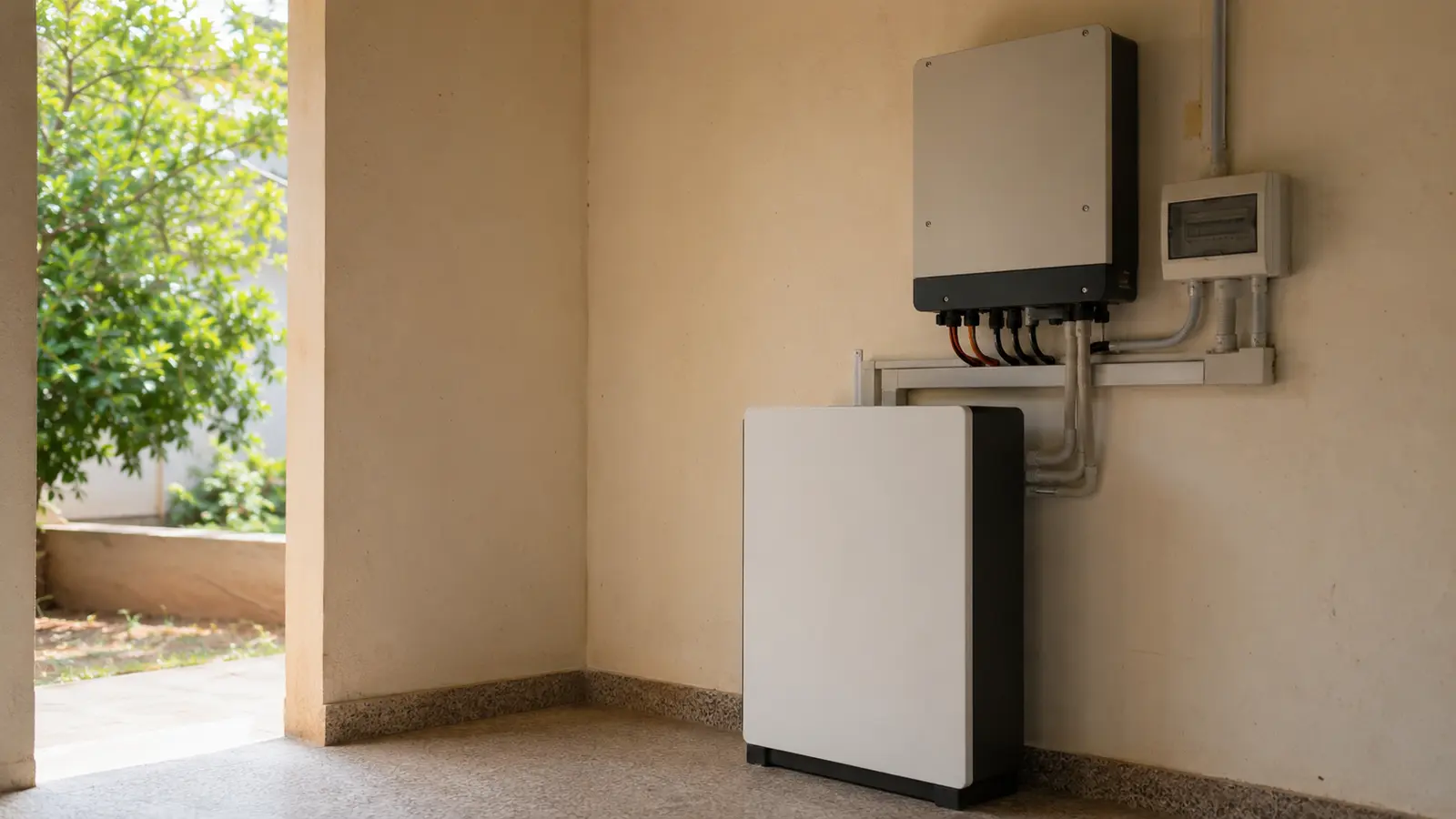
Installation should protect the house
The system may require:
- correct DC and AC isolation;
- overcurrent protection;
- surge protection;
- appropriate cable sizing and terminations;
- earthing;
- a critical-load distribution board;
- safe changeover or hybrid inverter configuration;
- clear labels;
- monitoring and fault access;
- a shutdown procedure.
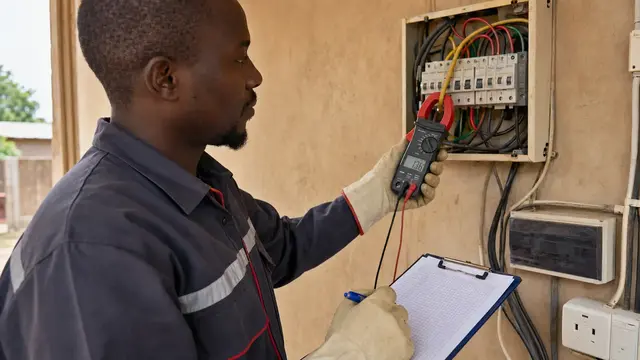
Electrical work should be completed by a competent professional. A network or technology provider can map which services must continue, but should not improvise mains electrical work outside its competence.
Test the home in reduced mode
After installation, simulate a real cut.
Check that:
- transition is stable
- Wi-Fi and provider equipment remain online
- the refrigerator starts
- the pump is controlled
- runtime is visible
- high loads are excluded
- alerts work
- the family knows what may be used
- grid return does not cause repeated switching
Record the result. A displayed battery percentage is less useful than a tested number of hours with the intended loads.
Read the battery sizing guide before comparing quotations. If the home will also use solar or a generator, use the hybrid decision guide.
Palmward can define the critical home technology, connectivity and operating target, then coordinate the appropriate power design with qualified electrical installation.