When the light goes, the business does not fail all at once.
The router may remain on while the provider terminal is off. The POS may have power but no internet. A generator may start after the camera recorder has already rebooted. The refrigerator may run, but the staff device used for bookings is not connected to backup Wi-Fi.
Continuity is the ability to preserve a complete business service, not the ability to keep one socket alive.
Decide what “open” means during an outage
A reduced operating mode should be written before equipment is purchased.
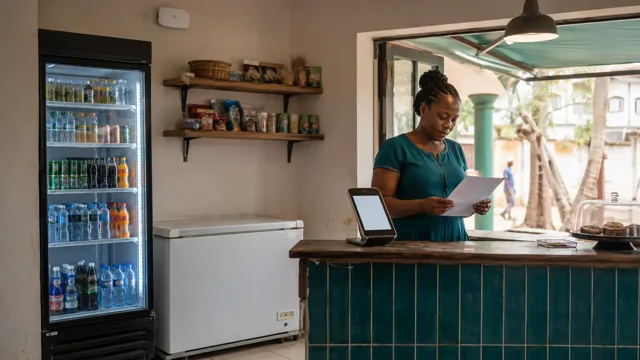
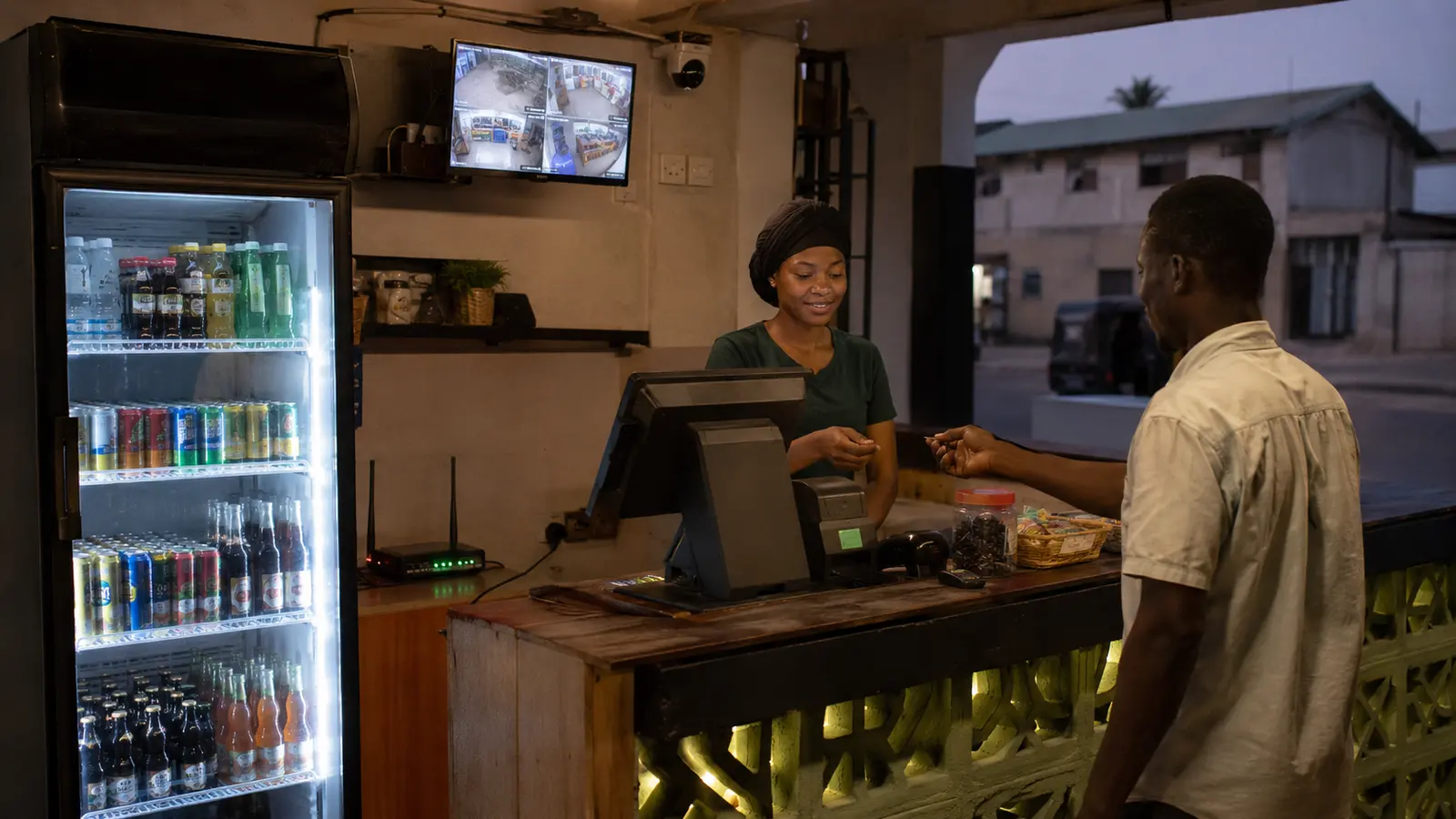
For a shop, open may mean that staff can receive payments, answer WhatsApp, issue receipts, keep one refrigerator cold and maintain camera recording.
For a hotel, it may mean that reception, booking access, selected guest Wi-Fi, access control, emergency lighting and key refrigeration continue.
For an office, it may mean calls, cloud applications, network access, one printer and a limited number of workstations.
The target should state:
- which services continue
- how long they must continue
- which equipment is allowed on backup
- which loads must remain off
- who responds when an alert appears
- when the generator is started
- how the business returns to normal power
Without this decision, battery capacity is consumed by convenience loads and nobody knows the real runtime.
Trace every dependency
Payment access can depend on five different components:
Grid or backup supply → provider terminal → gateway → Wi-Fi or switch → payment device
Camera recording may depend on the camera power source, network switch, recorder and viewing path.
A cloud booking system needs local power, internet, identity access and a working staff device.
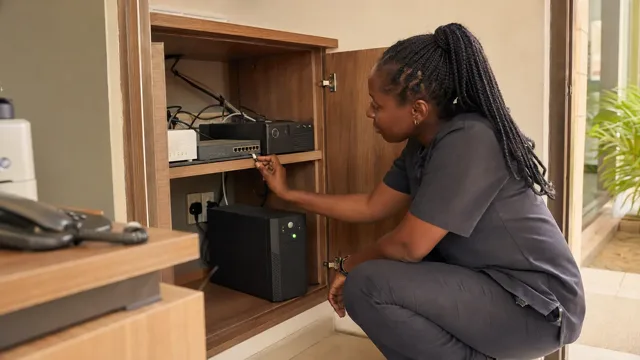
Walk through the site and verify the chain physically. Do not rely on a network diagram made years ago or on what staff think is connected.
Separate the critical circuit
The most effective backup systems usually protect less, not more.
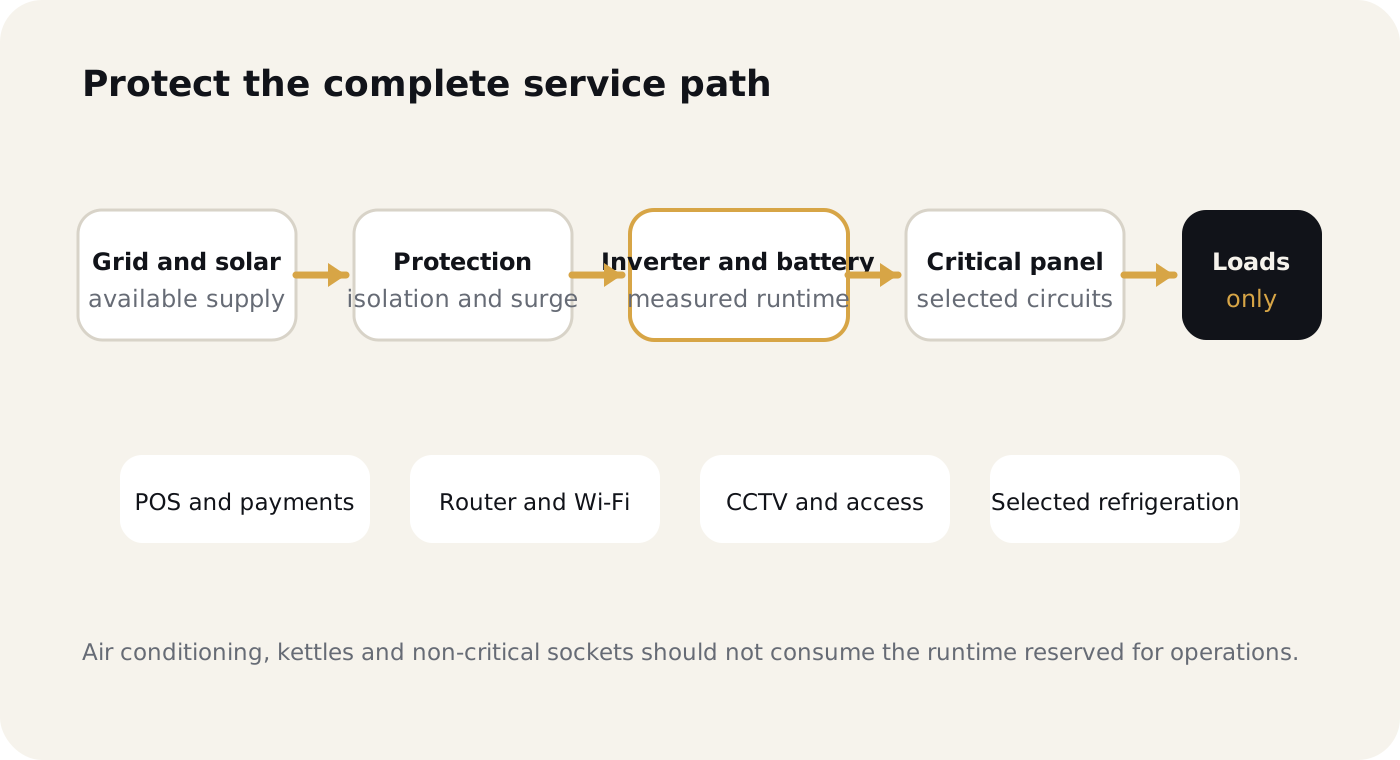
A dedicated critical-load panel or clearly controlled sockets can preserve:
- router and provider equipment;
- gateway and network switch;
- selected Wi-Fi access points;
- POS and one checkout device;
- CCTV and access control;
- a small number of lights;
- one or more critical refrigeration loads;
- monitoring and alerts.
General sockets should not allow somebody to plug in a kettle, iron or large appliance. Air conditioning normally requires a much larger design and should not be added casually to a small backup system.
This separation makes runtime predictable and reduces the chance of accidental overload.
Use each technology for the right job
A UPS is useful for near-instant transition and clean shutdown of network or computer equipment.
An inverter and battery can support selected circuits for a defined period.
Solar can recharge batteries and reduce daytime grid or generator consumption.
A generator can support longer outages and heavier loads, but introduces fuel, noise, servicing and a transfer period.
These tools are not rivals. A robust commercial design may use a small UPS for sensitive equipment, an LFP battery for quiet continuity, solar for daytime energy and a generator for extended operation.
The right mix depends on the load profile and outage objective.
Plan refrigeration carefully
Refrigerators, freezers and pumps have compressors or motors. Their starting demand can be much higher than their running demand.
The design must consider:
- startup power;
- normal duty cycle;
- ambient heat;
- how often doors open;
- acceptable temperature control;
- whether every unit is truly critical;
- recovery after a long interruption.
Do not size from the number printed on a sales page alone. Measure the actual equipment and use qualified electrical design.
Protect against poor power quality
Total outages are only one risk.
Voltage fluctuation, surges, unstable generator output, weak connections and poor earthing can damage sensitive equipment or shorten its life. Backup power should be coordinated with proper isolation, protection, cable sizing and grounding.
An inverter does not repair an unsafe electrical installation.
The electrical side must be assessed and completed by a competent professional. Network and systems specialists should identify the critical services and verify the transition with the electrician.
Test the real event
Commissioning is not finished when the battery display turns on.
Conduct a controlled outage test and confirm:
- the transition does not reboot critical devices
- the POS still completes its required workflow
- the primary or backup internet path remains usable
- selected Wi-Fi coverage is available
- cameras continue recording
- refrigeration starts without overload
- alerts reach the responsible person
- measured runtime matches the plan
- return to grid or generator power is stable
Repeat the test periodically and record battery health, faults and actual runtime.
Build a system staff can operate
Continuity should not depend on one technician answering the phone at midnight.
Label the critical circuits. Put the reduced operating procedure where staff can find it. Make generator responsibility clear. Record which loads should be disconnected if runtime falls faster than expected.
The system is successful when ordinary staff can keep the business operating safely.
The latest Gambian business data explains why this should be treated as routine planning. The battery sizing guide shows how load and runtime become capacity.
Palmward maps the operation, connectivity and critical power path, then coordinates the technology around the result. That is more useful than selling a battery before anybody has defined what must survive.